



Join as Editorial Board Member / Associate Editor / Peer Reviewer
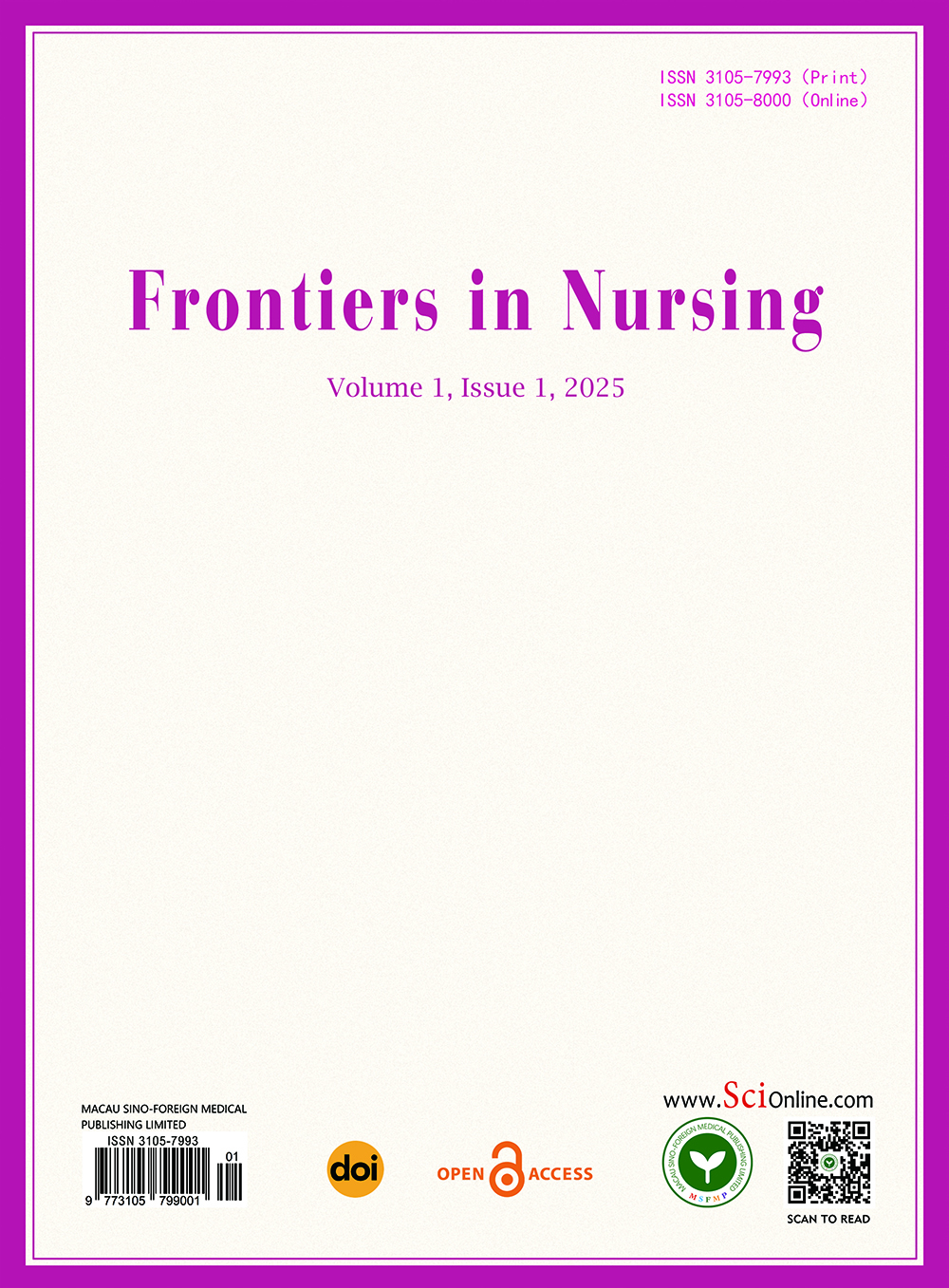
ISSN 3105-7993(Print)
ISSN 3105-8000(Online)
CODEN:FNABAF
Identifiers: International Standard Serial Number (ISSN) / Globally Unique Identifier (GUID)
Assigning Agency: Chemical Abstracts Service (CAS)
DOI Prefix 10.66106/fnabaf
Distributor (China): China International Book Trading Corporation (CIBTC)
Import Registration No.: G015Z137
Editorial Board
Editor-in-chief
Liu Li (China)
Deputy Editor-in-Chief
Chang-Mei He(Qianjiang Ethnic Hospital, Chongqing, China)
Fang-fang Wu (China)
Cheng Lin (China)
Isabella Clark (Canada)
Emma Johnson (USA)
Grace Thompson (New Zealand)
Lily Taylor (Australia)
The above rankings are not in order
Editorial Board Member
Ji Sheng(Shanghai University of Medicine and Health Sciences, China)
Assistant to the Editorial Board
Ming-ming Huang (China)
Index / Retrieve / Archive
This journal is indexed in the following globally authoritative databases, dedicated to the barrier-free global dissemination of research outcomes.
DOI
ICI–Index Copernicus International (Poland)
EuroPub Academic Literature Database (United Kingdom)
ACADEMIA (USA)
Yangtze River Database (China)
Open Access Library (United States)
Baidu Scholar (China)
Baidu Baike (China)
Google Scholar (United States)
ASCI–Asian Science Citation Index (United States)
EZB(Germany)
TIB–German National Library of Science and Technology
Vanderbilt University Medical Center (United States)
ESJI–Eurasian Science Journal Index (Kazakhstan)
Kind Congress (Azerbaijan)
Research Bible(Japan)
SJIFactor
Sci Online
Scribd(United States)
LivRe(Brazil)
ResearchGate (Germany)
RCCSE–Research Center for Chinese Science Evaluation
Editing and Publishing
Macau Sino-Foreign Medical Publishing Limited(MSFMP)
Address
Unit D, 7th Floor, No. 19, Rua de Pa̍k-chiông Vai, Macau
Telephone
+853 6881 9699
Email
QuestPress@hotmail.com
Web site
https://qyhlx.scionline2025.com
| About Journal | More |
Chinese Title:前沿护理学
ISSN 3105-7993 (Print)
E-ISSN 3105-8000 (Online)
CODEN: FNABAF (Assigned by Chemical Abstracts Service, CAS)
Publication Model: Gold Open Access under the Creative Commons Attribution 4.0 International License (CC BY 4.0). All articles are published open access, immediately and permanently free for everyone to read, download, copy, and distribute.
Publisher: MSFMP
Publication Frequency: Quarterly
Publication Language: English
Submission Language: English
Distribution Support: China International Book Trading Corporation (CIBTC)
Import Registration Number: G015Z137
Dialogues Across Civilizations, Shared Academic Futures.
Indexed in leading global academic databases, this journal is dedicated to advancing the worldwide dissemination of high-quality research and to collaborating with scholars globally in building an open, collaborative, and forward-looking international scholarly community.
Core Positioning
Frontiers in Nursing is an international, peer-reviewed academic journal dedicated to pioneering and disseminating innovative research and forefront practices in nursing science. The journal champions the multidimensional advancement of the discipline, with a focused emphasis on evidence-based practice, precision nursing, smart healthcare technologies, and global health nursing. We actively encourage interdisciplinary research that synthesizes clinical expertise, digital innovation, public health principles, and social science insights to provide a robust theoretical and practical foundation for shaping the future of nursing care systems.
Scope of Submission
The journal welcomes original research articles, reviews, case studies, and methodological papers within, but not limited to, the following domains:
Evidence-Based Nursing Practice and Clinical Decision-Making Models
Precision Nursing and Personalized Health Management
Smart Nursing Technologies and Digital Health Solutions
Nursing Policy and Healthcare System Innovation
Geriatric Nursing and Chronic Disease Management
Critical Care Nursing and Disaster/Emergency Response
Nursing Education and Professional Development
Transcultural Nursing and Health Equity
Nursing Ethics and Patient Safety
Nursing Economics and Health Outcomes Evaluation
Aims and Vision
Our goal is to establish Frontiers in Nursing as an internationally recognized, authoritative platform that drives the evolution of nursing practice towards greater scientific rigor, technological integration, and person-centered care. We are committed to fostering a vibrant global academic community, providing a high-caliber forum for exchange among researchers, clinicians, and policymakers to catalyze theoretical innovation and practical advancement in nursing.
Global Indexing and Dissemination Plan
All published articles are assigned a unique Digital Object Identifier (DOI). The journal is actively pursuing inclusion in major academic databases, including:
International Databases: Science Citation Index Expanded (SCIE), MEDLINE/PubMed, Scopus, CINAHL, DOAJ (Directory of Open Access Journals), Google Scholar.
Chinese Databases: Baidu Scholar, WanFang Data, VIP Information, Macau Virtual Library, Longyuan Journal Network, Chaoxing Academic Platform, Changjiang Database, Xinhuanet Academic China, China National Knowledge Infrastructure (CNKI).
Join Us
We warmly invite distinguished scholars and experts in nursing, public health, and related fields from around the world to join our academic team as Editorial Board Members, Associate Editors, Peer Reviewers, or Editor-in-Chief.
Online Application: http://tg.scionline2025.com/01/bw.asp
Online Submission
Manuscripts should be submitted via our online system.
Submission Portal: http://tg.scionline2025.com/01/
《前沿护理学》期刊简介
期刊名称: Frontiers in Nursing
中文刊名: 《前沿护理学》
国际刊号:
ISSN 3105-7993 (印刷版)
E-ISSN 3105-8000 (在线版)
CODEN 码: FNABAF
(国际标准连续出版物标识符·全球唯一标识符,由美国化学文摘社 CAS 分配)
出版模式: 金色开放获取 (Gold OA),遵循知识共享署名 4.0 国际协议 (CC BY 4.0)。所有文章均以开放获取模式出版,全文永久免费供全球读者阅读、下载、复制与传播。
出版单位: 澳门中外医药出版社有限公司
出版频率: 季刊
出版语言: 英文
投稿语言: 英文 (必须包含摘要、关键词、作者单位、姓名及参考文献)
发行支持: 中国国际图书贸易集团有限公司 (CIBTC)
进口备案刊号: G015Z137
跨文明对话,共学术未来。
本刊已获全球多家权威学术数据库收录,致力于推动高质量研究的全球传播,与全球学者携手,共建开放、协作、前瞻的国际学术共同体。
核心定位
《前沿护理学》是一本国际同行评审学术期刊,致力于引领并传播护理科学领域的创新研究与前沿实践。本刊倡导护理学科的多维度发展,重点关注循证实践、精准护理、智能医疗技术及全球健康护理。我们积极鼓励融合临床专业、数字创新、公共卫生原则及社会科学见解的跨学科研究,为构建未来护理服务体系提供坚实的理论与实践基础。
收录范围
本刊欢迎原创研究论文、综述、案例研究及方法学论文投稿,主题包括但不限于以下领域:
循证护理实践与临床决策模型
精准护理与个性化健康管理
智能护理技术与数字健康解决方案
护理政策与医疗体系创新
老年护理与慢性病管理
危重症护理与灾害应急响应
护理教育与职业发展
跨文化护理与健康公平
护理伦理与患者安全
护理经济学与健康结果评价
宗旨与愿景
我们的目标是将《前沿护理学》建设成为具有国际影响力的权威学术平台,推动护理实践向着更加科学化、技术融合化及以人为本的方向发展。我们致力于培育充满活力的全球学术社群,为研究者、临床工作者及政策制定者提供高质量的交流平台,以促进护理学的理论创新与实践进步。
全球收录与传播计划
所有发表文章均注册唯一数字对象标识符 (DOI)。本刊正积极申请被国内外主要学术数据库收录,包括:
国际核心数据库: Science Citation Index Expanded (SCIE), MEDLINE/PubMed, Scopus, CINAHL, DOAJ (开放获取期刊目录), Google Scholar 等。
中文核心数据库: 百度学术、万方数据、维普资讯、澳门虚拟图书馆、龙源期刊网、超星学术平台、长江数据库、新华网学术中国、中国知网 (CNKI) 等。
加入我们
我们诚挚邀请全球护理学、公共卫生及相关领域的杰出学者与专家加入我们的学术团队,担任编委、副主编、审稿人或主编。
在线申请链接: http://tg.scionline2025.com/01/bw.asp
在线投稿
稿件请通过本刊在线投稿系统提交。
投稿系统链接: http://tg.scionline2025.com/01/
| All Issues | More |
|
Application Effect Analysis of Scenario Simulation Teaching in the Training of Core Emergency Response Capabilities for Gynecological Nurses
|
||||||
|
 |
|||||
| Fenglan Li | ||||||
| Abstract:Objective: To explore the application effect of scenario simulation teaching in the training of core emergency response capabilities for gynecological nurses, and to provide empirical evidence for optimizing thetraining model of gynecological nurses. Methods: A total of 20 in-service gynecological nurses in the gynecologydepartment of our hospital from January 2024 to January 2025 were selected and randomly divided into a controlgroup (10 nurses, receiving traditional lecture-based training) and an observation group (10 nurses, receiving scenariosimulation teaching training). The theoretical scores of emergency response, operational assessment scores, andemergency response capability scores of the two groups were compared before and after training, and the nurses'satisfaction with the teaching model was counted after training. Results: After training, the theoretical score (89.6±5.2points) and operational score (91.3±4.8 points) of the observation group were significantly higher than those of thecontrol group (78.5±6.1 points, 80.2±5.5 points), with statistically significant differences (P<0.05); the scores of theobservation group in the dimensions of "rapid assessment", "decision-making", and "teamwork" in emergencyresponse capability were better than those of the control group (P<0.05); the satisfaction of the observation groupwith the training model (90.00%) was higher than that of the control group (40.00%). Conclusion: Scenariosimulation teaching can significantly improve the core emergency response capabilities of gynecological nurses,enhance the effectiveness of training and nurses' satisfaction, and is worthy of promotion and application in theemergency training of gynecological nurses. | ||||||


|
Application of Optimized Process in Trauma Emergency Nursing
|
||||||
|
|
|||||
| Lili Li | ||||||
| Abstract:Objective: This study aims to explore the effect evaluation and impact deepening of implementing process optimization strategies in the nursing practice for critically ill trauma patients.Methods: A total of 100 critically illtrauma patients facing severe life challenges, admitted to the hospital from October 2021 to August 2023, wereselected as the research subjects. These patients were divided into a control group and an observation group accordingto the emergency nursing mode they received, with 50 patients in each group. The control group received routinenursing services based on the traditional framework to meet basic medical needs, while the observation groupbenefited from the optimized nursing process. The core of this study was to comprehensively examine and comparethe efficiency of the two groups in multiple key treatment links, including admission response speed, ability to quicklyestablish intravenous access, accuracy and timeliness of condition assessment, implementation efficiency ofcardiopulmonary resuscitation (CPR), adequacy and speed of surgical preparation, and guarantee of timely oxygensupply.Results: In the comparative analysis, the observation group showed a significant reduction in all key treatmenttime indicators—admission time, time to establish intravenous access, condition assessment time, CPR time, surgicalpreparation time, and oxygen inhalation time—compared with the control group, and this difference was highlystatistically significant (P<0.05), demonstrating the remarkable effect of the optimized nursing process in improvingtreatment efficiency. At the same time, the incidence of adverse reactions in the observation group during theprognosis period was significantly lower than that in the control group, which further confirmed the significantadvantage of the optimized nursing process in reducing the risk of complications and promoting patient recovery,with a significant difference (P<0.05). Finally, in terms of patient satisfaction, the satisfaction of the observationgroup was significantly higher than that of the control group, and this difference also reached statistical significance(P<0.05), fully illustrating the important role of the optimized nursing process in improving patients’ medicalexperience and enhancing doctor-patient trust.Conclusion: The implementation of optimized emergency nursingstrategies in the field of trauma emergency can significantly improve the success rate of rescue and effectivelypromote the positive improvement of patients’ prognosis. | ||||||
|
Nursing Analysis of a Patient with Left Lung Adenocarcinoma Complicated by Intrapulmonary Metastasis and Bone Metastasis
|
||||||
|
|
|||||
| Jialian Liu | ||||||
| Abstract: This article retrospectively analyzes the clinical data and nursing process of a 77-year-old patient with postoperative left lung mucinous adenocarcinoma complicated by intrapulmonary metastasis and bone metastasis.Upon admission, the patient presented with clinical symptoms including general soreness, nausea and vomiting, chesttightness, and fatigue, along with comorbidities such as chronic renal insufficiency and hypertension. During thenursing period, the nursing team developed a nursing plan focusing on pain management, symptom care, complicationprevention, psychological support, and discharge guidance based on a comprehensive assessment. After 12 days ofnursing intervention, the patient achieved well-controlled pain, relieved infection, and improved symptoms beforebeing discharged. This case provides a reference for the nursing of patients with advanced lung cancer metastasis,contributing to enhancing the nursing quality and quality of life for similar patients. | ||||||
|
Effect of Kangaroo Mother Care Combined with Tactile Massage in the Nursing of Premature Infants and Its Impacton Sleep Status
|
||||||
|
|
|||||
| Weiwei Zhao | ||||||
| Abstract:Objective: To study the effect of Kangaroo Mother Care (KMC) combined with tactile massage in nursing intervention for premature infants and analyze the improvement of infants’ sleep quality.Methods: A total of 80 prematureinfants admitted to our hospital from July 2024 to July 2025 were selected and randomly divided into a control group andan observation group, with 40 cases in each group. The control group received conventional nursing intervention, whilethe observation group was additionally given KMC combined with tactile massage intervention. Differences in sleepquality and nursing effect between the two groups were observed.Results: The nursing satisfaction of the observationgroup was higher than that of the control group, and the incidence of adverse reactions was lower than that of the controlgroup. The observation group had longer sleep duration, fewer number of awakenings, and shorter awakening durationthan the control group. After nursing, the observation group showed higher scores in parents’ care ability, height, weight,daily milk intake, and Neonatal Behavioral Neurological Assessment (NBNA) scale, while the score of the Chinese InfantSleep Assessment Scale (ISAS) was lower than that of the control group. All differences were statistically significant (P<0.05).Conclusion: Due to immature intrauterine development, premature infants have slow postnatal growth anddevelopment and sleep disorders. Conventional nursing can only ensure the infants’ life safety but has poor effects inimproving their growth and development and sleep quality. The implementation of KMC combined with tactile massageintervention has a better effect, which can help infants restore normal feeding tolerance and sleep quality as soon aspossible and ensure their growth and development. This intervention is worthy of clinical attention. | ||||||
|
Application Effect of Operating Room Detailed Nursing in Laparoscopic Appendectomy for Appendicitis in Adolescent Patients
|
||||||
|
|
|||||
| Ailing Jiang | ||||||
| Abstract:Objective: To analyze the application effect of operating room detailed nursing. Methods: Eighty adolescent patients with appendicitis who underwent laparoscopic surgery from January 2021 to December 2023were selected and randomly divided into two groups. The control group received routine nursing, while theobservation group received operating room detailed nursing. The differences in postoperative prognostic indicatorsbetween the two groups were compared; the changes in anxiety, depression scores and stress indicators before andafter nursing were observed; and the differences in nursing satisfaction between the two groups were compared.Results: Compared with the control group, the observation group had better postoperative prognostic indicators, witha statistically significant difference (P<0.05); after nursing, the observation group had lower anxiety and depressionscores, with a statistically significant difference (P<0.05); after nursing, the levels of epinephrine and norepinephrinein the observation group were lower, with a statistically significant difference (P<0.05); the observation group hadhigher nursing satisfaction, with a statistically significant difference (P<0.05).Conclusion: The implementation ofoperating room detailed nursing helps improve patients' postoperative prognosis and promotes early discharge ofpatients, which is worthy of promotion and application. | ||||||
|
Evaluation of the Effect of Individualized Nursing Intervention on Nursing Satisfaction in Uremic Patients Undergoing Blood Purification Therapy
|
||||||
|
|
|||||
| Aihua Chen | ||||||
| Abstract:Objective: To explore the application value of individualized nursing in uremic patients undergoing blood purification therapy.Methods: A total of 100 uremic patients who received blood purification therapy in our hospitalfrom February 2024 to February 2025 were divided into two groups (control group and experimental group) usingthe random number table method. The control group was given routine nursing, while the experimental group receivedindividualized nursing. The effects of the two nursing modes were compared.Results: After intervention, theexperimental group (with individualized nursing) showed significant advantages in uremic patients’ emotional state,Pittsburgh Sleep Quality Index (PSQI) score, total effective rate, complication rate, and nursing satisfaction (all P <0.05).Conclusion: Individualized nursing has a definite effect during blood purification therapy for uremic patientsand is worthy of clinical promotion. | ||||||